
Why are some Catholics so darned afraid of the human body? Have they not read Genesis 1:31, when God saw everything that he had made and said that it was very good?
I have been pondering that question after reading an article on priestly celibacy by veteran Vaticanista Sandro Magister. Writing in the Italian newspaper Chiesa on February 28, Magister talks about the possibility of opening the Roman Catholic Church to a married priesthood; but he then quotes several authors and theologians who have concluded that Latin Rite priests, if they are to marry, must remain celibate, living with their wives “like brother and sister.”
I am reminded of another tradition which demonstrates how some Catholics find normal bodily functions to be unworthy of a holy person. That is the tradition, held by some Eastern Rite Catholics, that Mary did not give birth to Christ vaginally. According to this tradition, in a supernatural delivery, in a ray of golden light, Jesus just somehow appeared on Mary’s abdomen, because…. Virgin. Adherents to this tradition would seem to believe that if the vagina is spread open for the delivery of a healthy full-term baby, then obviously, the woman is no longer a virgin.
My conclusion, after reading these reports, is that Sex Is Dirty.
Well, not really.
“Married Clergy Must Remain Celibate”
What really happens when I hear that a married priest (such as is common in the Eastern Rites, and like some former Anglicans admitted to priesthood in the Latin Rite by special provision) must never participate in sexual intercourse with his wife is that I am deeply troubled by the mistaken idea that the marital act somehow renders a person unfit for priestly ministry.
- On the one hand, some in the Church give lip service to the sanctity of marriage-calling the marriage bed “undefiled” and expressing their conviction that the love between a husband and wife, which finds full expression in the sexual act, is holy and good and blessed by God.
- But on the other hand, there is an almost superstitious belief that priests must be “better than that.”
Don’t get me wrong: What I am NOT doing is demanding that the Church embrace a married priesthood for all clergy. I respect the right of Holy Mother Church to impose disciplines-and priestly celibacy is is, in fact, a discipline imposed for the good of the Church and the individual. It could at some point be changed. (In contrast, the all-male priesthood is a matter of doctrine and will never be changed. Just as all of Jesus’ apostles were men, the Catholic Church calls only men to the Sacrament of Holy Orders, and will never ordain women to the priesthood.)
But Holy Matrimony, like Holy Orders, is a sacrament-an occasion of grace. And the Sacrament of Marriage is only valid if the partners are both open to new life, willing to accept any children God may give them. To teach that the coming together of two loving spouses in marriage is wrong (or simply, less than the holy ideal toward which priests must strive) seems to me to be a throwback to gnostic dualism. It also cheats the wife of a Catholic priest of that pleasure which is legitimately hers, namely the union with her God-given spouse.
Sandro Magister reported on two recent books published in Mexico which address the possibility of a married clergy.
Franco-Mexican historian Jean Meyer, author who studied the Catholic insurrection in Mexico called the Cristiada (the story of which is told in the excellent film For Greater Glory), published a 2009 Spanish-language book, “El Celibato Sacerdotal.” In it, according to Magister, the author opposes the introduction into the Latin Church of a married clergy that would live “more uxorio”-that is, as husband and wife joined as one flesh, and enjoying normal marital sexual relations. This is because, in Meyer’s view, a married priesthood would mark a rupture in the tradition of the Latin Church, in which from apostolic times priests with wives had to live as brother and sister.
The second book Magister cites. “Il Celibato Dei Preti,” is by 73-year-old Fr. Vittoro Moretto, and was released in Mexico in 2012, and then in Italy two years later.
“Mary Did Not Undergo Normal Labor and Delivery”
“…left her alone and went to pray. After a while, I don’t know exactly how long, a bright light came through the ceiling which illuminated everything, and then there appeared a white cloud that enveloped the Immaculate Virgin, it was so beautiful that I don’t have words to describe it. Her eyes were fixed ahead and a ray of light was shining on her face, I don’t know how to explain.She looked and smiled. It seemed like a conversation with an invisible being from whom the light was coming.St. Joseph, upon seeing this splendor and his wife who appeared to be in Heaven, prostrated himself with his face on the ground, feeling confused. I don’t know how long the conversation with the invisible being lasted, when I saw Mary extending her arms and receiving the small child Jesus….What happiness!…What joy!….I can’t explain, not even the expression of the Celestial Mother towards the Son of God…human words are not enough…I let those who are more intelligent than me try to explain it. The light that was shining on her face disappeared. Now her gaze was fixed upon her Son. It seemed like an ecstasy of love.�?
Blessed Anne Catherine Emmerich also had a vision of Mary at the time of Jesus’ birth. She, too, dreamed that Jesus just appeared out of nowhere and out of light (well, out of Mary’s body, but not by the normal vaginal channel). She wrote:
The light which surrounded the Blessed Virgin became more and more brilliant: the light of the lamp prepared by Joseph could not be seen. When the hour of midnight arrived Mary was transported in an ecstasy. I saw her raised a certain height from the ground; she had her hands crossed upon her breast. The light kept increasing around her; everything seemed to feel a joyful emotion, even things inanimate. The rock which formed the floor and the wall of the grotto were, as it were, alive with light. But soon I saw no more of the roof; a luminous path, whose bright ness continually increased, went from Mary to the highest heaven. Then was there a marvellous movement of the celestial glories, which, approaching nearer and nearer, appeared distinctly under the form of the angelic choirs. The Blessed Virgin, raised from the earth in her ecstasy, prayed and turned her eyes to her God, of whom she had become the mother, and who, a feeble new-born infant, was lying on the ground before her.
I saw Our Saviour like a little shining infant, whose brilliance eclipsed all the surrounding splendour, lying upon the rug before the knees of the Blessed Virgin. He seemed to me very small, and to grow larger before my eyes; but this was only the radiance of a light so dazzling that I can scarcely say how I could see it.
The Blessed Virgin remained some time in ecstasy. Then I saw her place a linen cloth over the child; but she did not touch Him nor take Him yet into her arms. After a short time I saw the Infant Jesus move, and I heard Him cry. It was then that the Blessed Virgin recovered the use of her senses. She took the child, wrapped it in the linen cloth with which she had covered it, and took it in her arms against her breast. I believe that she suckled it. I then saw angels around her in human form prostrate themselves before the new-born and adore Him.
For each of these holy women, Mary’s virginal conception was followed by a virginal birth. I’ve heard Fr. Mitch Pacwa, whom I respect highly, take a similar position-imagining that Jesus just appeared there on Mary’s belly, without having disturbed her body by stretching a pushing and emerging via the birth canal.
These are private revelations and have been neither endorsed nor condemned by the Church. You can believe them if you want, but are under no obligation.
But my point is this: Virginity is not simply a physical protection of the hymen from intrusion, from either internal or external forces. Virginity is the state of having never engaged in sexual intercourse, and the state of being mentally and psychologically pure. A normal labor and delivery would not, in my estimation, diminish Mary’s purity nor would it make her “not a virgin.”
If you believe that Mary gave birth to Jesus supernaturally because you see this as one more manifestation of the greatness of God, so be it. I see nothing in Scripture to verify that belief; I do not share that belief; but you are entitled to it.
However, if you believe that Mary gave birth to Jesus supernaturally because you are intent on keeping her body in its pristine teenage shape, because anything else would make her somehow less worthy…. well, then I encourage you to reconsider the beauty and the holiness of the human body, in all its mystery and its glory.
We are fearfully and wonderfully made.


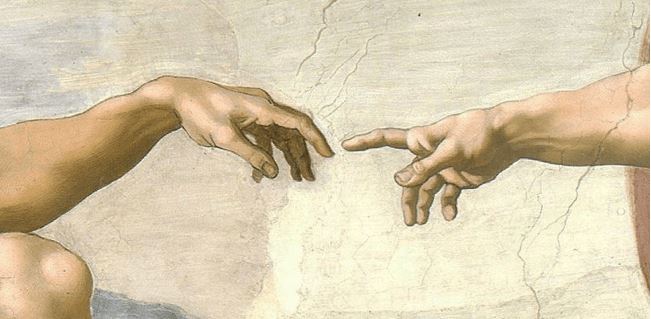
That the Lord did not harm His mother in His incarnation is more than a private revelation. It was taught in several local councils with papal approval (such as Lateran in AD 649), by several popes and doctors (including St. John Paul II and St. Thomas Aquinas), and even in Vatican II (LG 57).
As for married clergy in the Roman Rite, it’s actually a matter of canon law. Just as the Western norm is to ordain those who discern a vocation of celibacy, the exception of ordaining married men is for those couples who have (together) discerned a vocation of a Josephite marriage.
It’s not that sex is dirty or that the sacrament is somehow unworthy (otherwise, the eastern tradition would be invalid), but that celibacy and josephite marriages “for the kingdom” point to Heavenly things in ways more obvious than the normal vocation of marriage.
Marriage is an awesome, wonderful and as a sacrament, supernatural, gift of God. Therefore to make of it a Sacrifice to the glory of God, that is, to forego it for His glory and for the salvation of souls is in itself greater. “It is better and more blessed, virginity and celibacy for the sake of the Kingdom of God, than marriage.” This was defined dogmatically and infallibly at the Council of Trent.
The Church does teach, however, that Mary’s virginity is “in partu” meaning in the very act of childbirth. However, I think, we should let that remain a mystery to us and the details to her. As one theology prof I had in seminary put it: Just as we would not be comfortable discussing our biological mother’s gynocological exams neither should we be overly curious or speculative about the Blessed Mother’s.
This was a really great article. I have to say, as a single woman, I would have in some way thought those positions to be a possibility, because in the world around me and in my previous life, the sexual act had become perverted. After my husband and I were steeped in Theology of the Body prior to marriage, and then having been married for 5.5 years now - living out the Theology of the Body in all aspects of life, and having given birth to 3 children, I definitely understand where people who take those positions come from, but I think it stems from a societal or personal experience of perversion of sex (which has happened to varying degrees in all ages and in all people) and then, once having given one’s life to Christ, an honest fear of experiencing that perversion again.